

You might have read my last article and thought – What the heck is a Heat Pump Water Heater? Aren’t heat pumps used for HVAC?
You are right, heat pumps are used for heating and cooling homes and offices, but that technology is used for many other things including water heaters. I’ve started to see more homes with heat pump water heaters. At first I thought they were just super-sized water heaters, but I learned more about them and found they are super efficient. It could be a great choice if you need to replace your water heater soon.
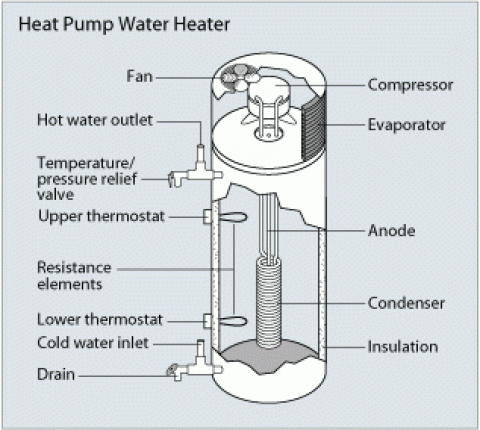
What Are Heat Pumps
Heat pump water heaters (HPWHs) are an energy-efficient alternative to traditional water heaters, offering significant savings on energy consumption and costs. Here’s a detailed comparison and things to consider when evaluating a heat pump water heater.
Energy Usage Comparison
Heat Pump Water Heaters (HPWHs):
- HPWHs use electricity to move heat from the surrounding air into the water tank, making them highly efficient.
- They can be two to three times more energy-efficient than traditional electric resistance water heaters.
- HPWHs typically use about 1,000 to 3,000 kWh per year, depending on usage and climate, whereas traditional electric water heaters may use around 4,500 to 5,000 kWh per year.
Traditional Water Heaters:
- Traditional electric water heaters directly heat water with electric resistance elements, which is less efficient.
- Gas water heaters burn natural gas to heat water, and while they can be less expensive to operate than electric heaters, they are less efficient than HPWHs.
- Energy usage for traditional gas heaters varies, but they generally use about 150 to 400 therms per year, which equates to around 4,500 to 12,000 kWh when converted.
Size Comparison
Heat Pump Water Heaters:
- HPWHs are typically larger than traditional water heaters due to the need for air circulation around the heat pump unit.
- They often require more vertical space because they have a taller profile, with an average height of 6 to 7 feet.
- They need to be installed in locations with sufficient airflow, like basements, garages, or utility rooms, as they draw heat from the air.
Traditional Water Heaters:
- Traditional electric and gas water heaters come in various sizes, but they tend to be more compact in comparison to HPWHs.
- They can be installed in smaller spaces like closets, attics, or small utility rooms.
Additional Considerations
1. Installation Location:
- HPWHs need a space that remains between 40-90°F year-round and has at least 1,000 cubic feet of air space around the unit.
- They are less suitable for installation in living spaces or small, enclosed areas due to the noise and cooling effect on the surrounding area.
2. Climate and Efficiency:
- HPWHs are more efficient in warmer climates where they can extract more heat from the air.
- In colder climates, their efficiency can decrease, and they might rely more on the electric resistance backup heating elements.
3. Initial Cost vs. Long-term Savings:
- HPWHs generally have a higher upfront cost than traditional water heaters.
- However, the long-term savings on energy bills can offset the initial investment, often paying back within a few years.
4. Maintenance:
- HPWHs require regular maintenance, such as cleaning or replacing air filters, to ensure optimal performance.
- Traditional water heaters also need maintenance, such as flushing the tank to remove sediment, but typically require less frequent attention than HPWHs.
5. Environmental Impact:
- HPWHs have a lower environmental impact due to their higher efficiency and reduced energy consumption.
- They can significantly reduce greenhouse gas emissions compared to traditional electric or gas water heaters.
6. Rebates and Incentives:
Puget Sound Energy
PSE offers homeowners a $750-$850 rebate when working with a contractor to install a Tier 3 or 4 heat pump water heater. Additionally, homeowners can get the same rebate amount if they purchase and install the unit themselves using an instant coupon available at Lowe’s or The Home Depot. ( https://www.pse.com/en/rebates/water-heating/heat-pump-water-heater-rebate )
Seattle City Light:
Homeowners can receive a $750 rebate when working with a contractor to install a Tier 3 or 4 heat pump water heater. Additionally, homeowners can get the same rebate amount if they purchase and install the unit themselves using an instant coupon available at Lowe’s or The Home Depot (https://seattle.gov/city-light/residential-services/home-energy-solutions#rebates).
Conclusion
When considering a heat pump water heater, it’s important to assess your home’s specific needs and conditions. Evaluate the available installation space, local climate, and potential energy savings. While HPWHs have a higher initial cost, their energy efficiency and long-term savings make them an attractive option for many homeowners.


Sell

Buy


